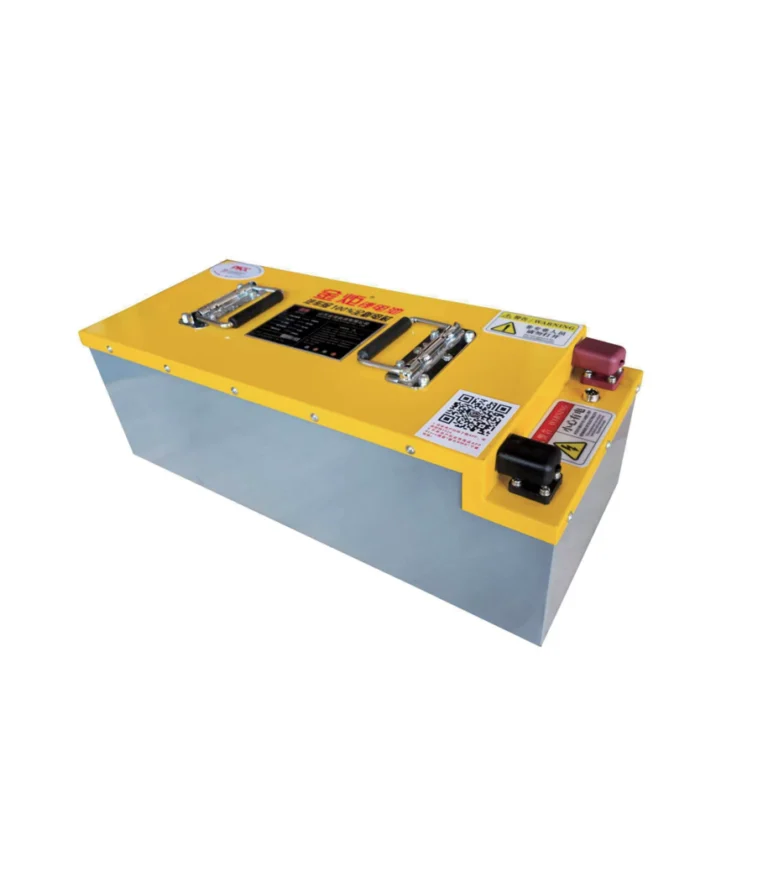
Golf Cart Lithium Battery Guide: 36V 48V and 72V Pack Selection
A golf cart lithium battery guide for dealers and fleet buyers comparing 36V, 48V, 60V, and 72V lithium conversion packs.


Table of Contents
A golf cart lithium battery is not just a battery with the right name on the label. Buyers need to match voltage, capacity, discharge current, charger profile, BMS protection, size, weight, and application before placing an order.
This 2026 guide is written for golf cart dealers, resorts, sightseeing fleets, utility cart operators, and lithium upgrade distributors. It explains the practical checks that help customers compare lithium battery options and decide whether a standard pack or custom Golden Torch pack is the better fit.
Quick answer: A good golf cart lithium battery should match the equipment voltage, fit the available space, deliver enough usable energy, include a protected BMS, and use a charger profile designed for lithium or LiFePO4 chemistry.
Golf Cart Lithium Battery Guide Checklist
- Confirm nominal voltage and the allowed voltage range of the controller or inverter.
- Calculate capacity from runtime, load current, route length, or daily duty cycle.
- Check continuous current, peak current, connector type, cable size, and fuse requirements.
- Match the lithium charger to battery chemistry, charging voltage, current, and BMS limits.
- Review installation space, mounting method, vibration, waterproofing, and temperature conditions.
- For OEM orders, prepare drawings, label requirements, sample expectations, and annual demand.
What Is a Golf Cart Lithium Battery?
A golf cart lithium battery is a rechargeable lithium battery pack designed for golf carts, resort carts, utility carts, sightseeing carts, and neighborhood electric vehicles. Compared with traditional lead-acid batteries, a lithium pack usually provides higher usable energy, more stable voltage under load, lower weight, faster charging, and less routine maintenance.
The right pack still depends on the system. Common cart systems use 36V, 48V, 60V, or 72V, so the pack must match the motor controller and charger. Fleet projects often compare 60Ah to 200Ah packs based on route length, passenger load, terrain, and charging window. A buyer should compare the complete electrical system instead of looking only at amp-hours.
Golf Cart Lithium Battery Specification Table
| Item | SEO / Buyer Detail |
|---|---|
| Target Keyword | golf cart lithium battery |
| Search Volume | 1900 |
| Keyword Difficulty | 9 |
| Application | golf carts, resort carts, utility carts, sightseeing carts, and neighborhood electric vehicles |
| Voltage Check | Common cart systems use 36V, 48V, 60V, or 72V, so the pack must match the motor controller and charger. |
| Capacity Check | Fleet projects often compare 60Ah to 200Ah packs based on route length, passenger load, terrain, and charging window. |
| Charger Check | A cart conversion should include a lithium-compatible charger or a verified charger profile for the chosen chemistry. |
| BMS Check | A high-current BMS is needed for acceleration peaks, hill climbing, regenerative current, and temperature protection. |
How to Choose the Right Golf Cart Lithium Battery
Use the golf cart lithium battery guide to compare the whole cart system. Voltage, passenger load, hills, route length, charging schedule, controller limits, and BMS peak current all affect the final pack choice.
1. Match the voltage first
Common cart systems use 36V, 48V, 60V, or 72V, so the pack must match the motor controller and charger. If the voltage range is wrong, the battery may trigger controller faults, reduce performance, or become unsafe under charging and discharge conditions.
2. Size capacity by usable energy
Fleet projects often compare 60Ah to 200Ah packs based on route length, passenger load, terrain, and charging window. Lithium batteries can normally use more of their rated capacity than lead-acid batteries, but real runtime still depends on current draw, temperature, terrain, load, and charging habits.
3. Confirm BMS and peak current
A high-current BMS is needed for acceleration peaks, hill climbing, regenerative current, and temperature protection. For B2B projects, the BMS should be selected together with cells, cables, connectors, fuse strategy, and enclosure design.

Golf Cart Lithium Battery Charger and Safety Notes
A cart conversion should include a lithium-compatible charger or a verified charger profile for the chosen chemistry. A charger with the wrong profile can cause slow charging, incomplete charging, shorter battery life, or protection shutdown. Buyers should confirm voltage, current, connector, polarity, and communication needs before sample production.
Safety checks should include overcharge protection, over-discharge protection, overcurrent protection, short-circuit protection, temperature monitoring, cell balancing, and transport packing requirements. For cold regions, low-temperature charging protection or heating may be needed.
Golf Cart Lithium Battery vs Lead-Acid Battery
- Weight: Lithium packs are usually much lighter for the same usable energy.
- Cycle life: LiFePO4 can support many deep cycles when used with the correct charger and BMS.
- Maintenance: Lithium batteries do not need watering or equalization routines.
- Voltage stability: Lithium output stays more consistent under load, which helps equipment performance.
- Upfront cost: Lithium can cost more initially, so buyers should compare lifetime cost, downtime, and service work.
Related Golf Cart Lithium Battery Buying Terms
Customers also search for related terms such as golf cart LiFePO4 battery, 48V golf cart battery, golf cart lithium conversion, electric cart battery. These terms show similar buying intent, but the final pack design still depends on voltage, capacity, discharge current, and the application environment.
Internal Resources for Golf Cart Lithium Battery Buyers
For more product and sourcing context, review custom lithium battery pack article, 48V LiFePO4 product page, contact Golden Torch. These internal links help buyers move from educational content to product comparison and quotation.
For fleet and dealer projects, the FAA lithium battery transport guidance is useful when planning packed battery shipments.
Golf Cart Lithium Battery FAQ
These FAQ points help golf cart dealers and fleet buyers check conversion details before choosing a lithium battery pack.
Can a golf cart lithium battery replace a lead-acid battery?
In many applications, yes, but the replacement must be checked against voltage range, charger profile, controller limits, space, cables, and current demand. A drop-in claim should always be validated before batch ordering.
What information should I send before ordering a golf cart lithium battery?
Send the original battery label, equipment model, target voltage, target capacity, installation dimensions, load current, charger information, connector photos, quantity, and operating environment.
Can Golden Torch make a custom golf cart lithium battery?
Yes. Golden Torch can support cell selection, BMS matching, enclosure design, connector configuration, communication options, labeling, sampling, and batch production for OEM and distributor projects.
Request a Golf Cart Lithium Battery Quote
To source a custom golf cart lithium battery, send your voltage, capacity, application, space limit, discharge current, charger requirement, connector photos, and annual demand. Contact Golden Torch for a battery project review.